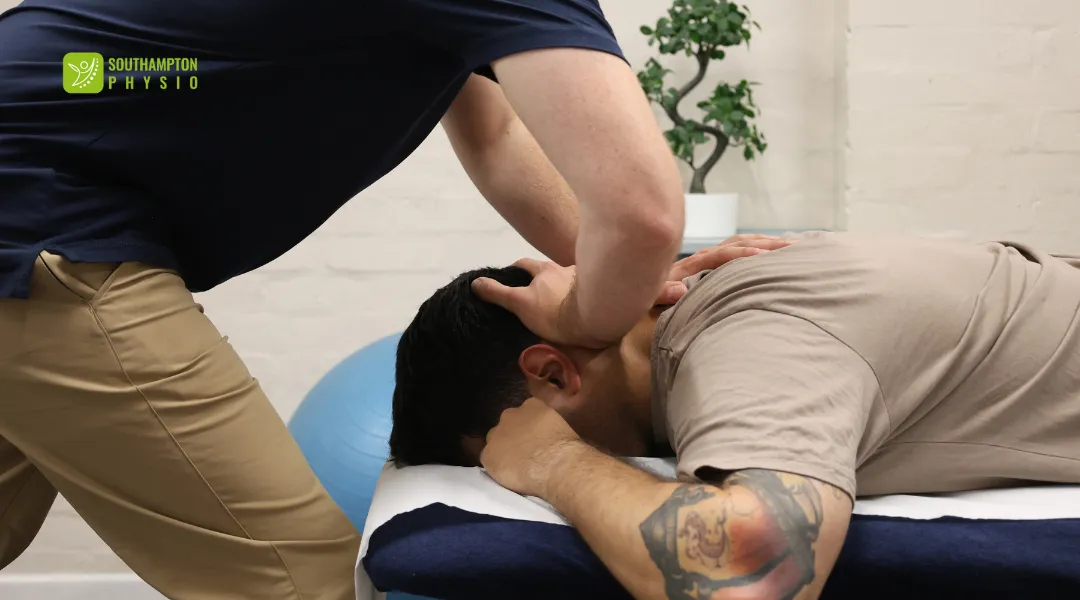
Why Neck Strengthening Matters - and How the Right Kit Can Help
The overlooked pillar of strength
We train legs to lift, cores to stabilise and shoulders to carry - but the neck rarely gets a look in. Until it starts hurting.
Neck pain is one of the most common musculoskeletal complaints worldwide, affecting up to 70% of adults at some point in life. It creeps in quietly: long hours at a desk, endless screen time or simply the habit of craning the head forward. Over time, muscles that should support the head lose endurance. Joints stiffen, nerves can become sensitive, and what began as a dull ache turns into a stubborn, activity-limiting problem.
The good news? The neck is remarkably trainable. With the right approach - and the right equipment - it can regain its natural strength, stability and resilience.
Why strengthening helps
Your head weighs roughly five to six kilos - about the same as a bowling ball. The neck’s job is to hold that weight steady and control movement through every glance, nod and phone scroll.
When those muscles lose strength, the load shifts elsewhere: small joints, discs and ligaments start doing work they were never meant to handle. Strengthening brings that load back where it belongs.
Research consistently shows that targeted neck strengthening reduces pain, disability and frequency of flare-ups. In one landmark study, a year of progressive neck and shoulder strengthening cut chronic pain and improved daily function compared to stretching alone (Ylinen et al., 2003). A Cochrane review later confirmed similar benefits across genders and settings (Salo et al., 2020).
Strengthening also protects against new episodes. A 2018 systematic review found that people who trained their neck muscles were less likely to develop neck pain in the first place - especially those with desk-based jobs (Cochrane Back and Neck Group, 2018).In short, strong necks cope better - with posture, pressure and life.
The three main types of exercise
Neck strengthening comes in three main forms: isometric, band or weight-based and machine-assisted. Each has its role - but the difference between “something” and “structured progress” often comes down to the tools available.
1.Isometric exercises: the easy first step
Isometric training - pushing gently against resistance without movement - is a great entry point. It teaches muscles to switch on again without aggravating pain.
These are ideal in early rehab or flare-ups and can even be done at a desk. They reawaken the deep stabilisers that tend to go dormant when pain hits.
●Press your forehead, temple or the back of your head into your palm or a towel.
●Hold for 5–10 seconds, repeat in each direction.
Simple, yes - but limited. Without progression, strength gains plateau. That’s where kit comes in.
2.Bands and straps: control the load, not the neck
Elastic resistance - through purpose-built neck bands or harness systems - adds a crucial next step: movement under load. Unlike improvised hand pressure, the resistance remains constant and measurable.
Recent systematic reviews show that multi-directional strengthening using elastic resistance improves pain, range and posture in chronic neck pain (Saavedra-Hernández et al., 2022). Bands also mimic the natural demands of daily life: turning, nodding or stabilising while you move.
The key advantage is control. Good kit allows small, precise adjustments to tension - so you can challenge the neck without flaring symptoms. It transforms guesswork into guided progression.
3.Machine-assisted training: measurable strength and safety
Purpose-built neck-strengthening machines and harness systems (like the equipment we’re introducing at Southampton Physio) take things a step further. They let us load the neck safely through its full range, measure progress objectively and tailor intensity to each individual.
A 2024 randomised trial found that device-assisted training achieved greater strength gains than manual methods, while both reduced pain and disability (Smith et al., 2024). For athletes or anyone prone to recurrent neck pain, the ability to train precisely and consistently makes a huge difference.
The benefit isn’t just the load - it’s the feedback. When patients can see their strength improve week by week, confidence grows and fear fades. And confidence is often the missing piece in long-term recovery.
What happens under the hood
Beyond the muscle itself, strengthening has powerful neurological effects. Regular resistance exercise improves proprioception (your awareness of head position), increases local blood flow and recalibrates the brain’s pain processing.
It’s why many people feel “lighter” and more stable after only a few weeks - the body is learning to trust movement again.
For those involved in sport, a strong neck may also buffer against impact. Football and rugby studies suggest higher isometric neck strength is linked with lower head acceleration during tackles or heading (Mansell et al., 2018). Evidence is early, but it points to a broader truth: a trained neck is a safer neck.
Nuance and exceptions
Strengthening is almost always safe when guided and progressive. Still, anyone with arm symptoms, numbness or worsening pain should seek professional assessment before loading the neck.
And while equipment helps, it’s not a magic bullet. Recovery also depends on sleep, stress and regular movement. Strength supports those factors - it doesn’t replace them.
Practical take-homes
● Train it like any other muscle. The neck benefits from load, progression and rest - just like legs or shoulders.
● Start small, move smart. Begin with isometrics, then add resistance through proper kit once symptoms settle.
● Measure and progress. Using structured equipment lets you increase strength safely and track improvement.
● Stay consistent. Two to three sessions per week for at least eight weeks deliver measurable change.
● Pair it with good habits. Posture variety, regular breaks and strength for the shoulders and upper back amplify results.
The human factor
We see it every week: someone with “stubborn” neck pain who’s tried massage, posture tips or ergonomic gadgets - but never actually trained their neck.
Once they start loading it safely, the story changes. Muscles firm up, confidence builds and those old flare-ups become rare. Having access to proper neck-strengthening kit - measured, safe and progressive - takes the guesswork out of the process and accelerates that turning point.
It’s not about overloading; it’s about re-teaching the body to trust itself again. The right equipment simply helps you get there faster and with proof that it’s working.
Recap
Neck strengthening is one of the most underrated tools for reducing pain, improving posture and protecting long-term function. Whether you’re recovering from an injury, stuck in a desk job or simply tired of recurring stiffness, strengthening gives your neck the resilience it deserves.
With the right guidance - and the right kit - you can finally move with freedom and confidence again.
Hit reply if you’d like to learn more about our upcoming neck-strengthening setup or to see how it could fit into your own recovery plan.
